Blog
Analysis, stories, and behind-the-scenes of the Niu Lai phenomenon
40 articles

The Number That Is Not the Film: How Three Rating Systems Turned One Movie Into Three Scores
Niu Lai carries three very different numbers — Douban 6.0, IMDb 6.5 weighted, and IMDb 8.2 raw. The gap between them says more about how each site counts than about what audiences watched.

Niu Lai 2 Is Going to the Spring Festival, and That Changes the Terms of the Entire Story
A two-person studio with a ¥100,000 budget is targeting the most crowded release window of the year. The sequel inherits the first film's success but loses the mechanism that produced it.
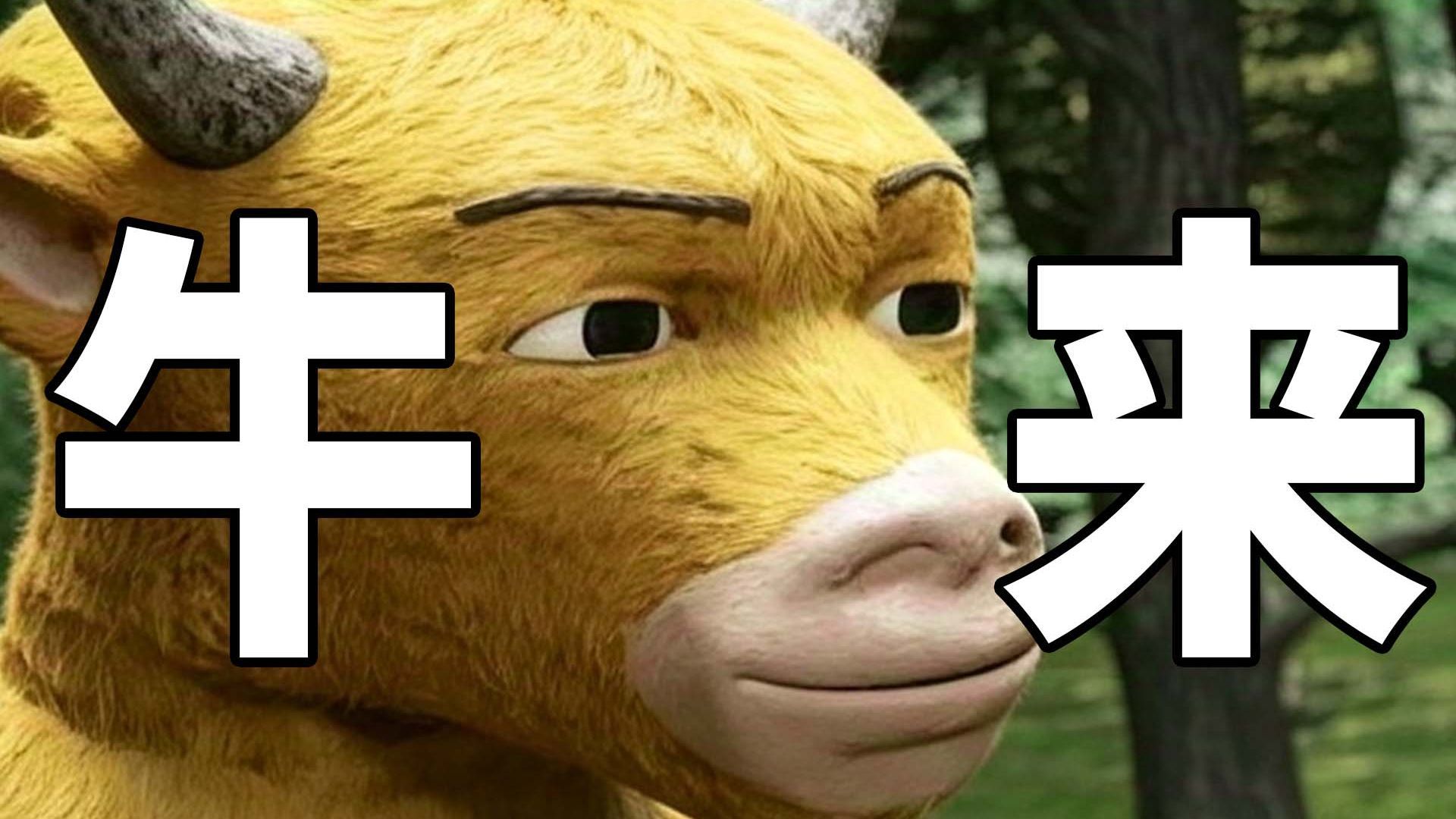
One Viewer per Showtime: The Arithmetic Behind China's Empty November
On November 3, 2026, Chinese cinemas ran 348,000 showtimes and sold 347,000 tickets — about one viewer per show. What the empty-session arithmetic reveals about a market with more doors than customers.
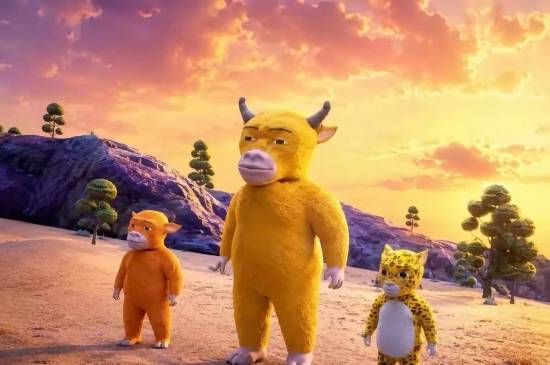
Every Extra Day on Screen Costs Two Days of Waiting: The Arithmetic Behind Niu Lai's Third Extension
Niu Lai's third key extension to December 5, 2026 added one month of sessions but pushed the earliest streaming date to August 2027. How the theatrical window formula works and why it locks a film out of favorable platform deals.
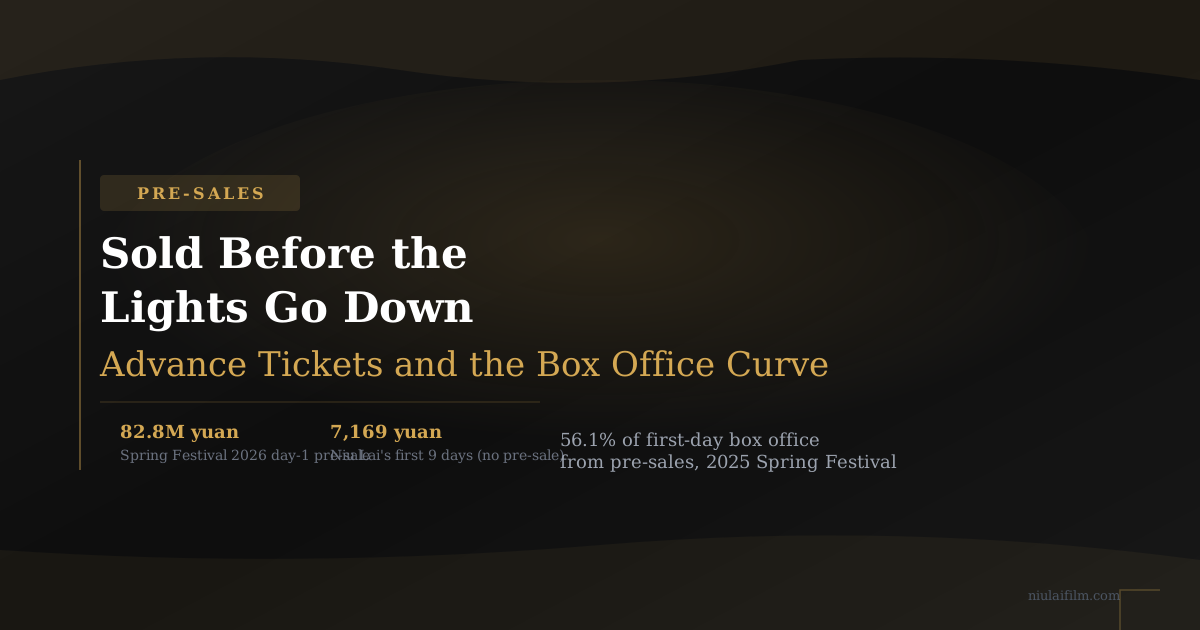
Sold Before the Lights Go Down: Advance Ticket Sales and the Shape of a Box Office Curve
Spring Festival 2026 pre-sales took 82.8 million yuan on day one. Niu Lai took 7,169 yuan across its first nine days. One figure is a marketing campaign; the other is a word-of-mouth phenomenon. The pre-sale system shapes every Chinese box office curve, even the rarest one.
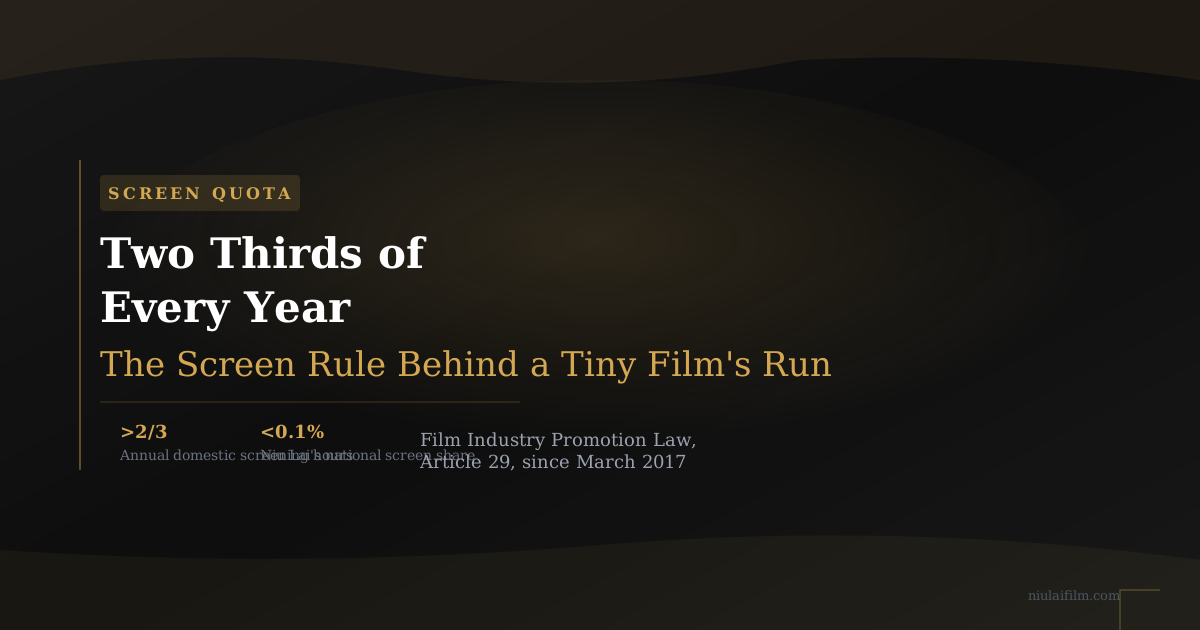
Two Thirds of Every Year: The Screen Rule Behind a Tiny Film's Long Run
A production of 250,000 yuan with 0.1 percent of national screens stayed in cinemas for three months. Behind that improbable run sits a legal floor most audiences have never heard of: two thirds of every year's screening time, reserved by law, for films made in the country that produced them.
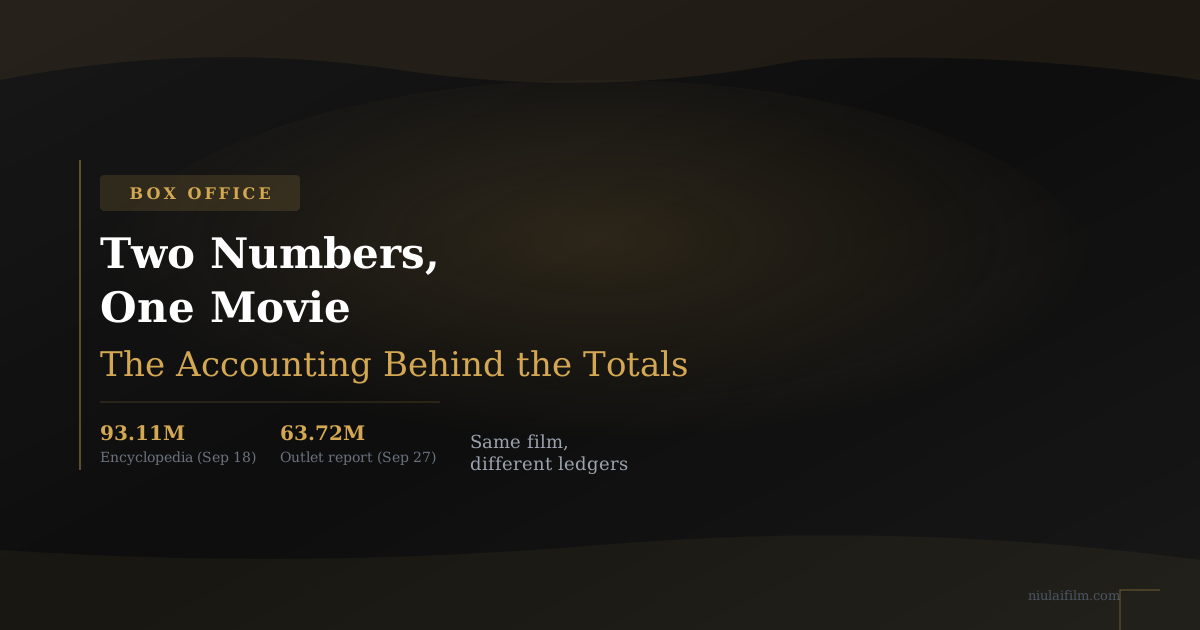
Two Numbers, One Movie: The Accounting Behind China's Box Office Totals
Niu Lai was reported as both 93 million and 64 million yuan. The gap is not a scandal. It is three different accounting systems, a service fee, and two different dates.
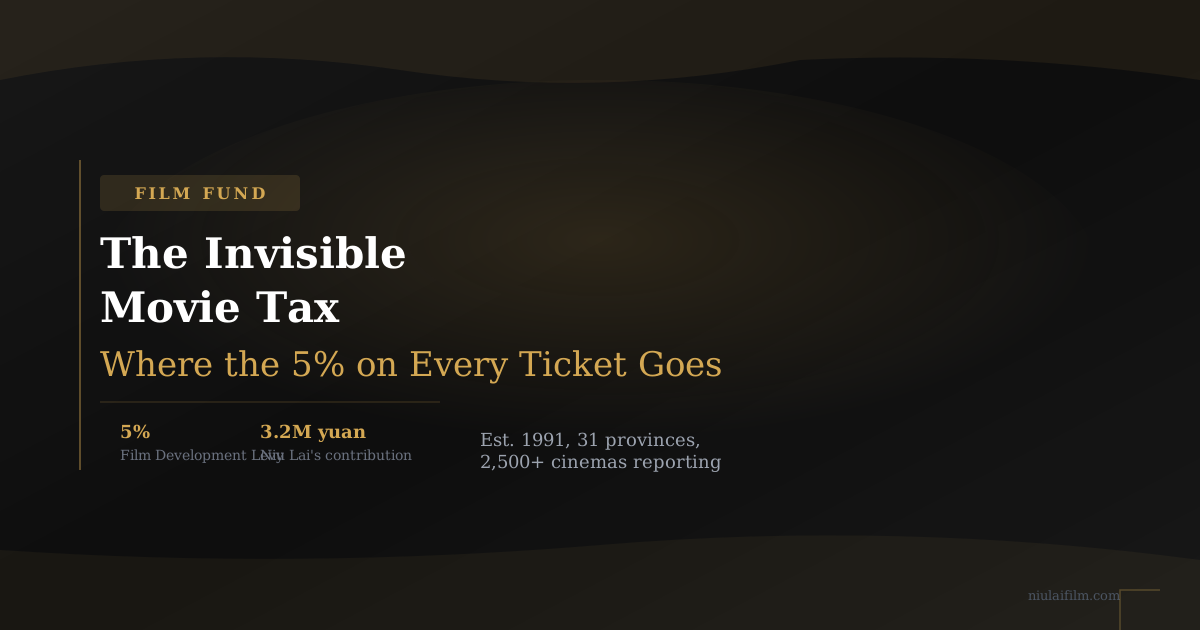
The Invisible Movie Tax: Where the 5 Percent on Every Ticket Goes
Over 3 million yuan from Niu Lai's ticket sales went into a fund most viewers never heard of. Here is the hidden infrastructure that every Chinese film helps build.
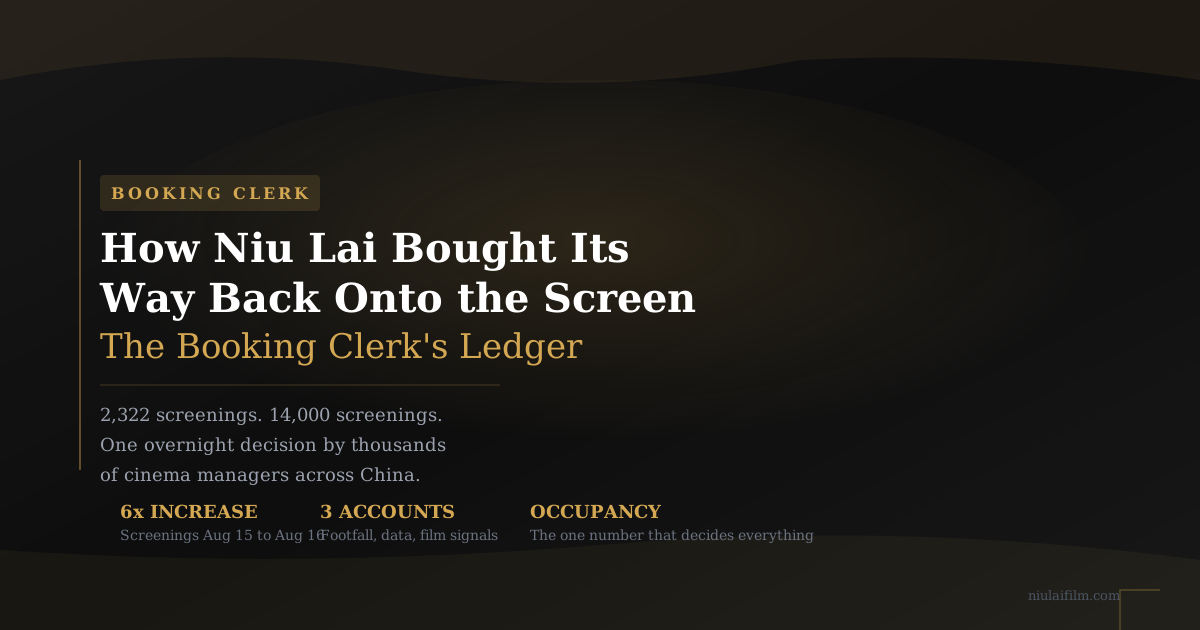
How Niu Lai Bought Its Way Back Onto the Screen
Between August 15 and 16, the number of Niu Lai screenings multiplied by roughly six. A jump like that does not happen because a committee changed its mind. It happens because thousands of cinema managers made the same decision on the same night.
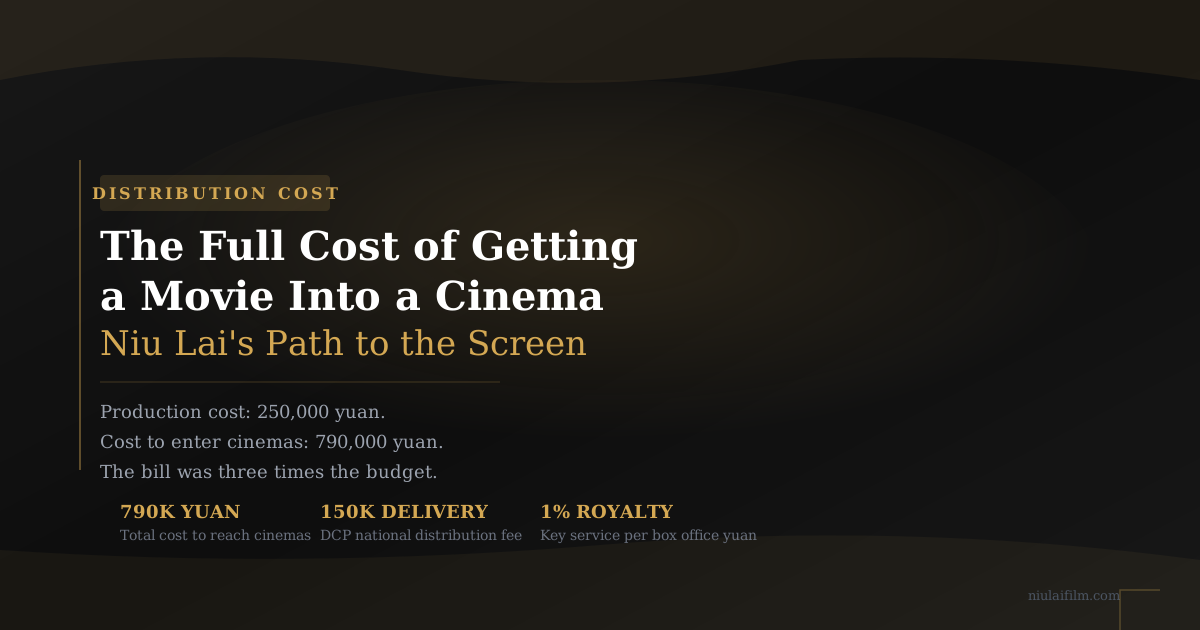
The Full Cost of Getting a Movie Into a Cinema
Production cost 250,000 yuan. Cost to enter cinemas 790,000 yuan. The bill for being legally screenable was three times the budget for making the film.
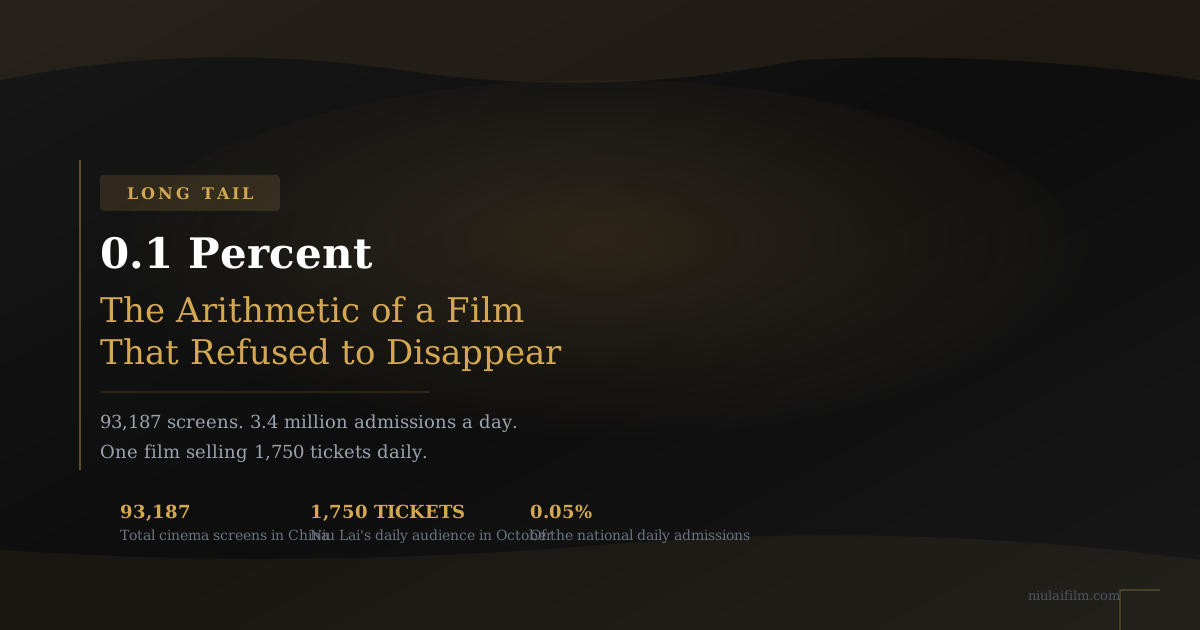
0.1 Percent: The Arithmetic of a Film That Refused to Disappear
93,187 screens. 3.4 million admissions a day. One film selling 1,750 tickets daily. The math of a long tail that refuses to end.
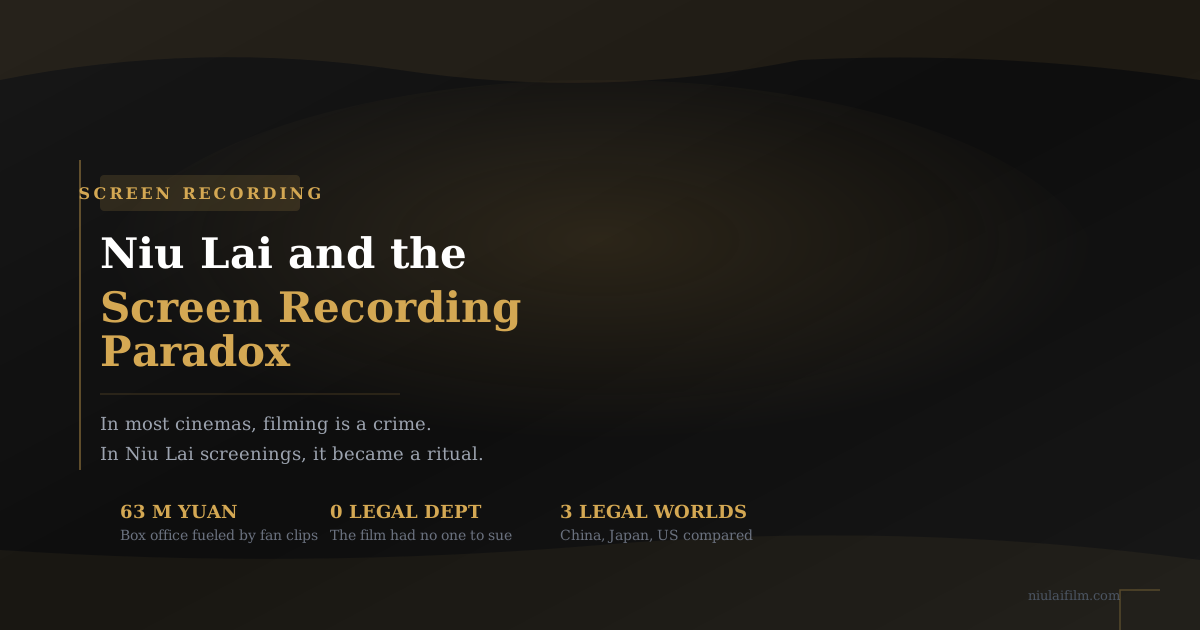
Niu Lai and the Screen Recording Paradox
In most cinemas, filming is a federal crime. In Niu Lai screenings, it became an unspoken ceremony, because the film had no trailer, no roadshow, and no legal department to enforce the rules.
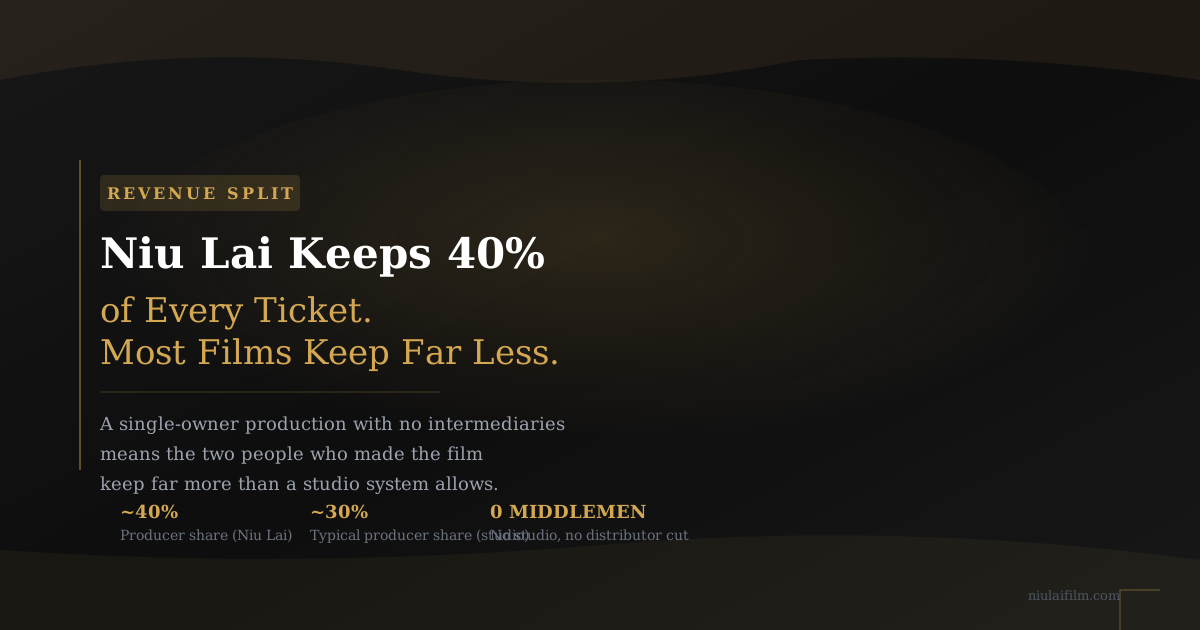
Niu Lai Keeps About 40 Percent of Every Ticket. Most Films Keep Far Less.
Behind the reported ¥64 million gross lies a complex web of deductions. A single-owner production with no intermediaries means Niu Lai's creators keep far more of the box office than most filmmakers do.
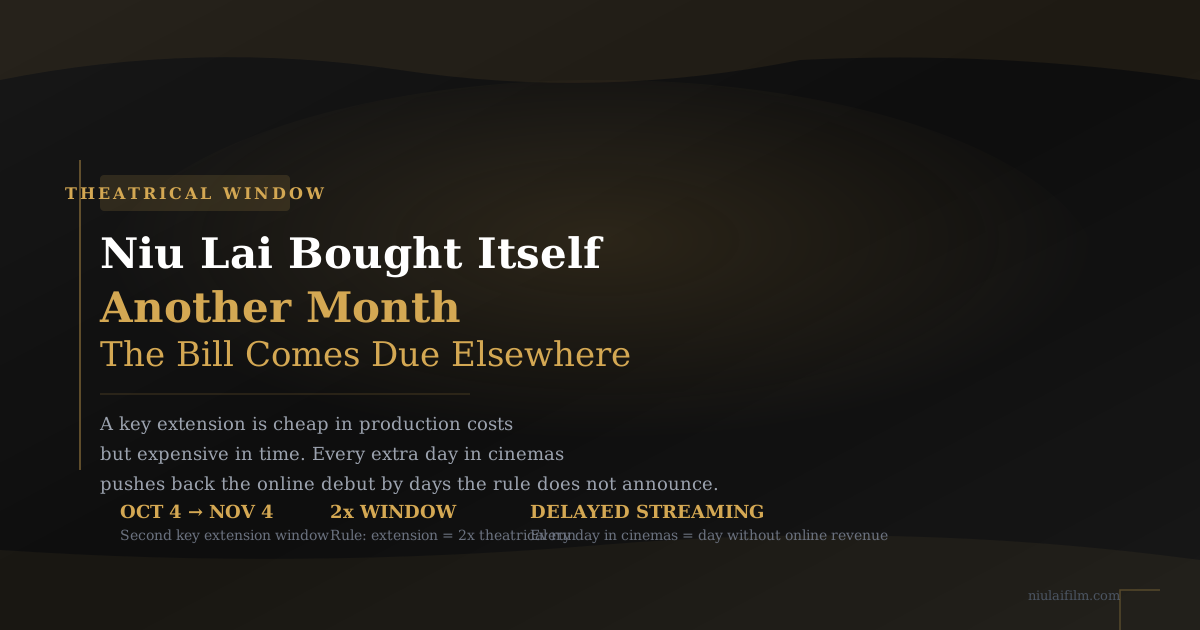
Niu Lai Bought Itself Another Month in Cinemas. The Bill Comes Due Elsewhere.
A key extension is cheap in production costs but expensive in time. Every extra day Niu Lai stays in cinemas pushes back its online debut by days the window rule does not announce.
How a Two-Person Team Cleared China's Theatrical Approval Process
A decorator with no film background and his mother spent three years on paperwork and five on animation to get Niu Lai into cinemas. Here is how China's approval system actually works.

Niu Lai's Theatrical Run Ends: What the October 4 Key Expiry Means
The screening key for Niu Lai expires on October 4, closing the strangest 61-day theatrical run of the year in China — from 7,169 yuan in nine days to over 63 million yuan.
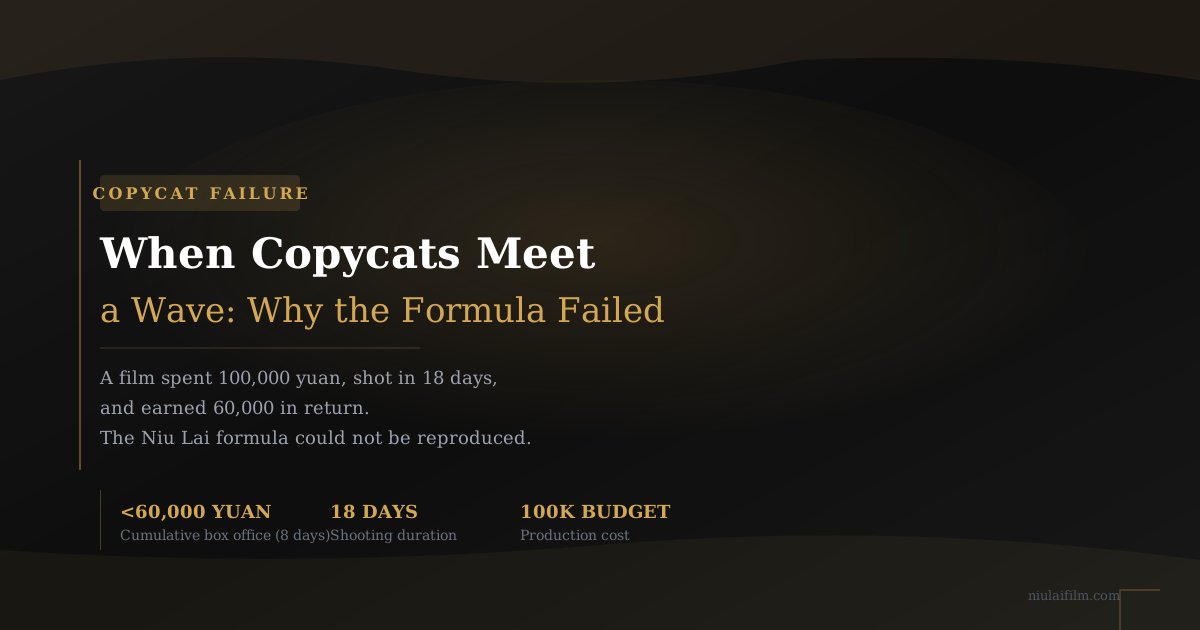
When Copycats Meet a Wave: What the Niu Lai Story Tells Other Filmmakers
After Niu Lai's improbable box office success, a wave of low-budget imitators tried to copy its formula. One spent 100,000 yuan on an 18-day shoot and earned under 60,000. The story of the failed copies tells us something important about why audiences actually showed up for the cow.
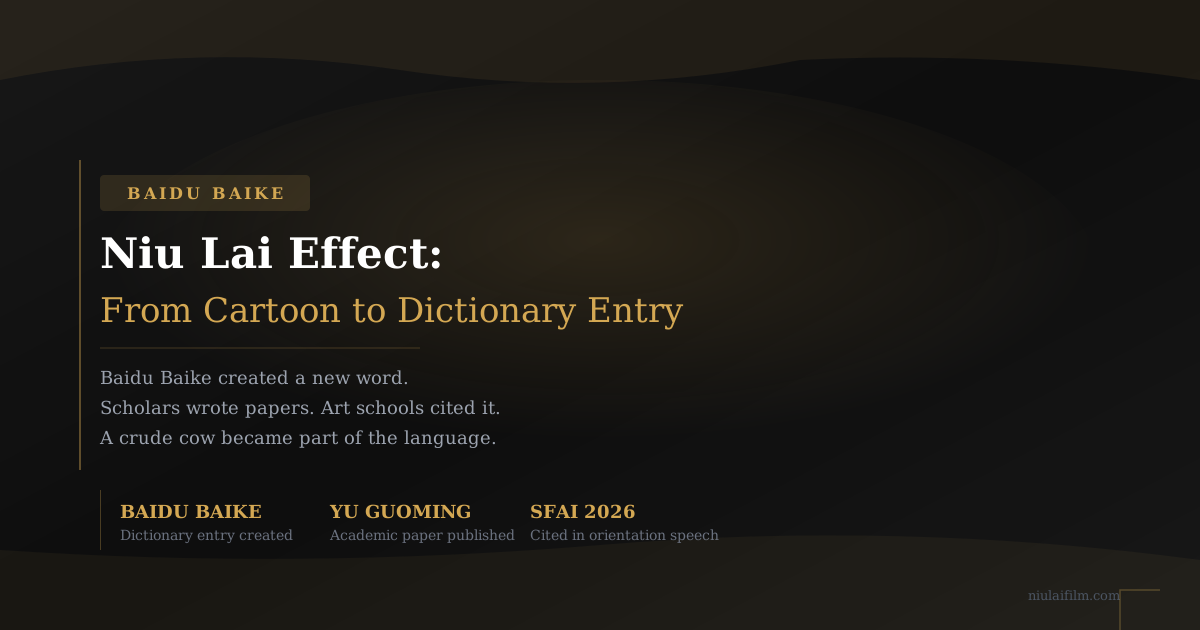
Niu Lai Effect: How a Crude Cartoon Became a Dictionary Entry
Baidu Baike now has an entry for the 'Niu Lai phenomenon'—a word that describes any ugly, unexpected thing that catches fire anyway. Scholars are writing papers. Art schools are quoting it in orientation speeches. A crude cartoon from Dalian has become a linguistic event.

A One Hundred Million Yuan Cast Meets Two People and a Cow
A star vehicle with 20+ famous faces and a 100 million yuan budget opened to just 1.5 million yuan on day one. Meanwhile, the two-person cartoon it released against kept climbing. This is the story of the weekend that proved famous faces no longer sell tickets.
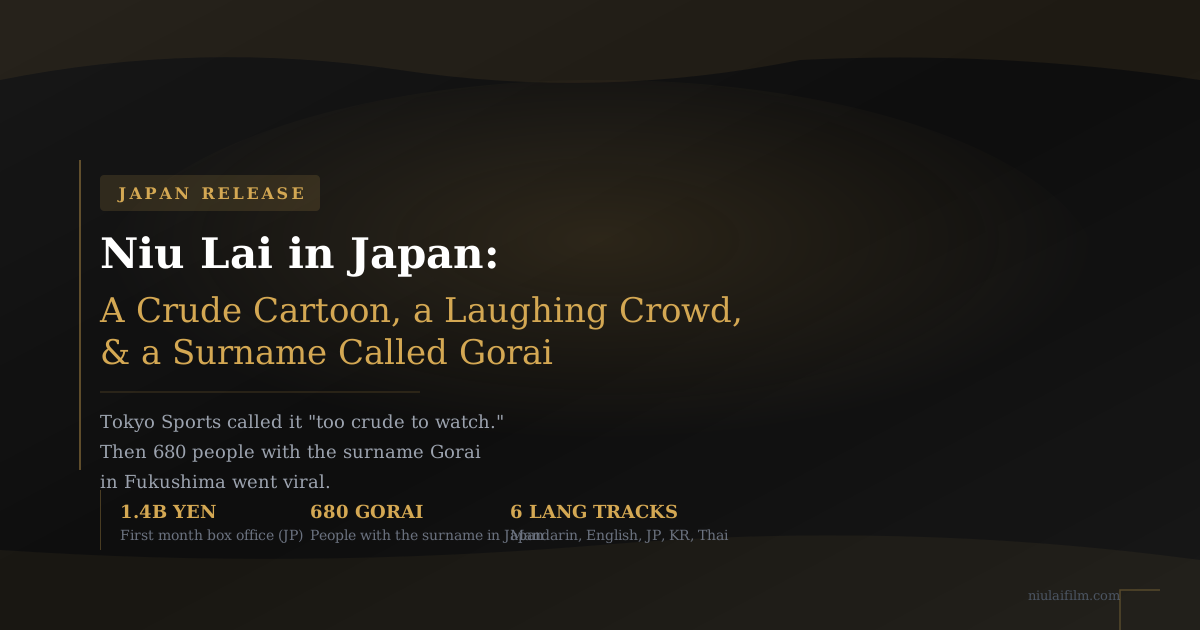
Niu Lai in Japan: A Crude Cartoon, a Laughing Crowd, and a Surname Called Gorai
When Niu Lai reached Japanese theaters, it did something no one predicted: it turned a nearly extinct Japanese surname into a viral moment, made Tokyo Sports Web's front page, and earned roughly 1.4 billion yen in its first month.
Is Niu Lai a Triumph or a Warning? Inside China's Heated Debate
A cartoon that opened with 7,169 yuan now sits above 63 million. China's critics and audiences are still fighting over whether that is a heartwarming story or a dangerous signal that roughness pays.
From a Dalian Living Room to Toronto: How Niu Lai Reached the World
A homemade Chinese cartoon drew the attention of TIFF's Midnight Madness curator without submitting a single entry. Here is how a rough calf from Dalian became a global cult object.
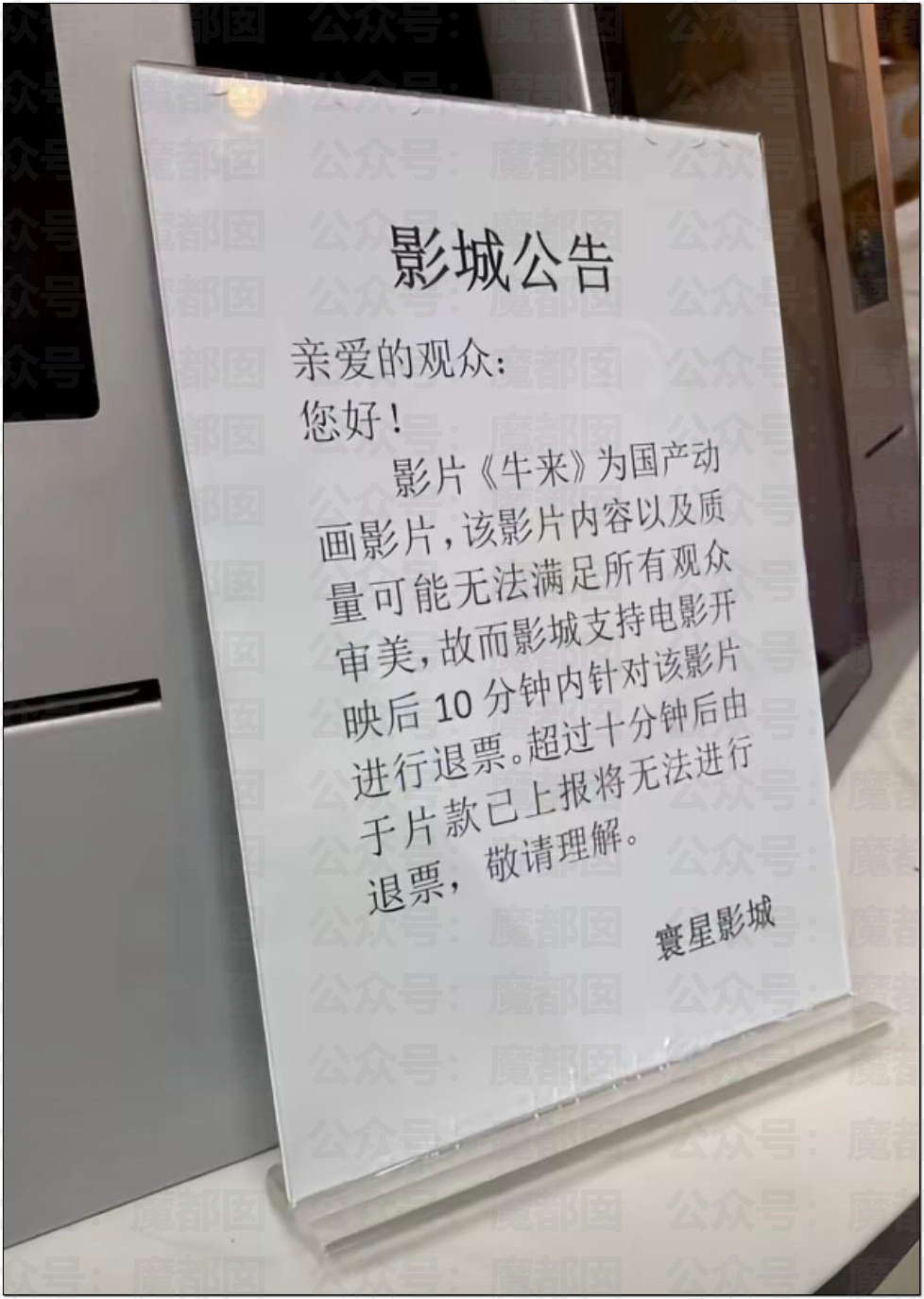
How Brands Hijacked a 'Bad' Movie: The Niu Lai Meme Machine
A film that opened with a few thousand yuan in ticket sales should never have topped a marketing textbook. Yet Niu Lai did exactly that, by handing the internet a toy instead of a product.
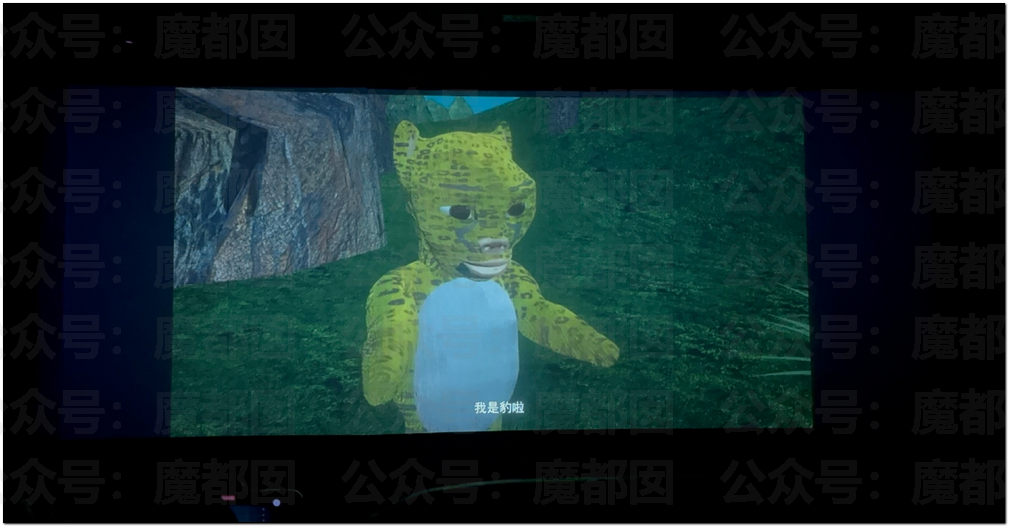
Why a 'Ruined' Cartoon Became Young China's Unlikely Therapy
When Niu Lai reached theaters, its rough animation and stuttering frames should have made it forgettable. Instead, audiences wept, called their mothers, and found something they could not name in a clumsy cartoon calf.
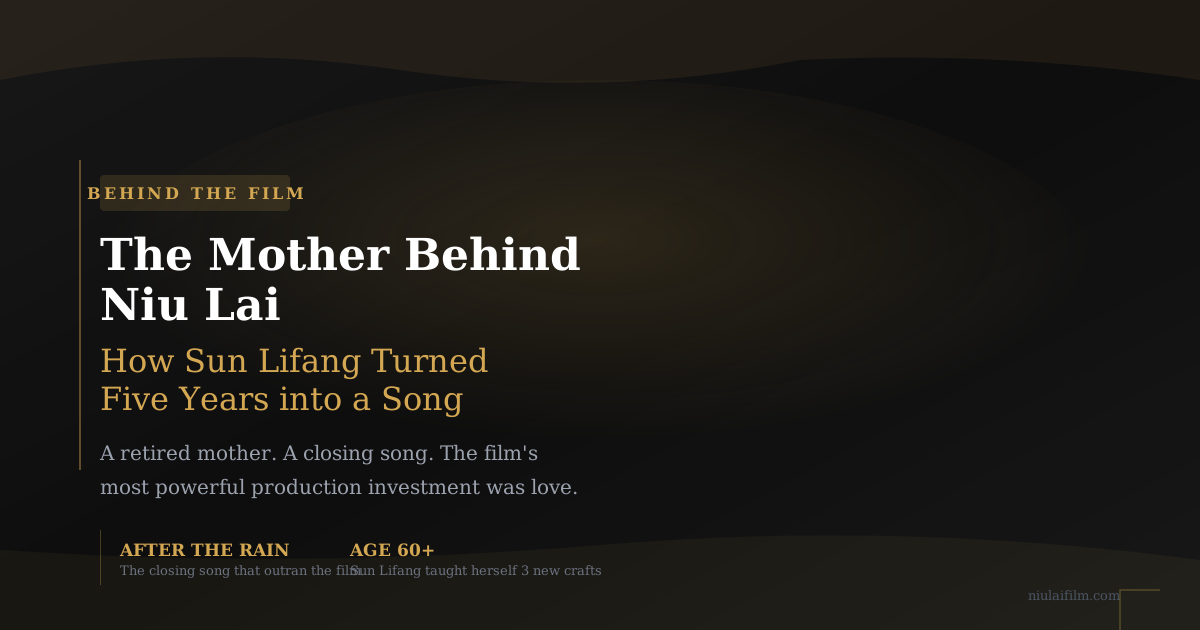
The Mother Behind Niu Lai: How Sun Lifang Turned Five Years into a Song
Most viral films have a marketing team behind the noise. Niu Lai had a mother. Sun Lifang, in her early sixties, taught herself screenwriting and composed the film's closing song — a melody now called 'worth 100 million yuan.'
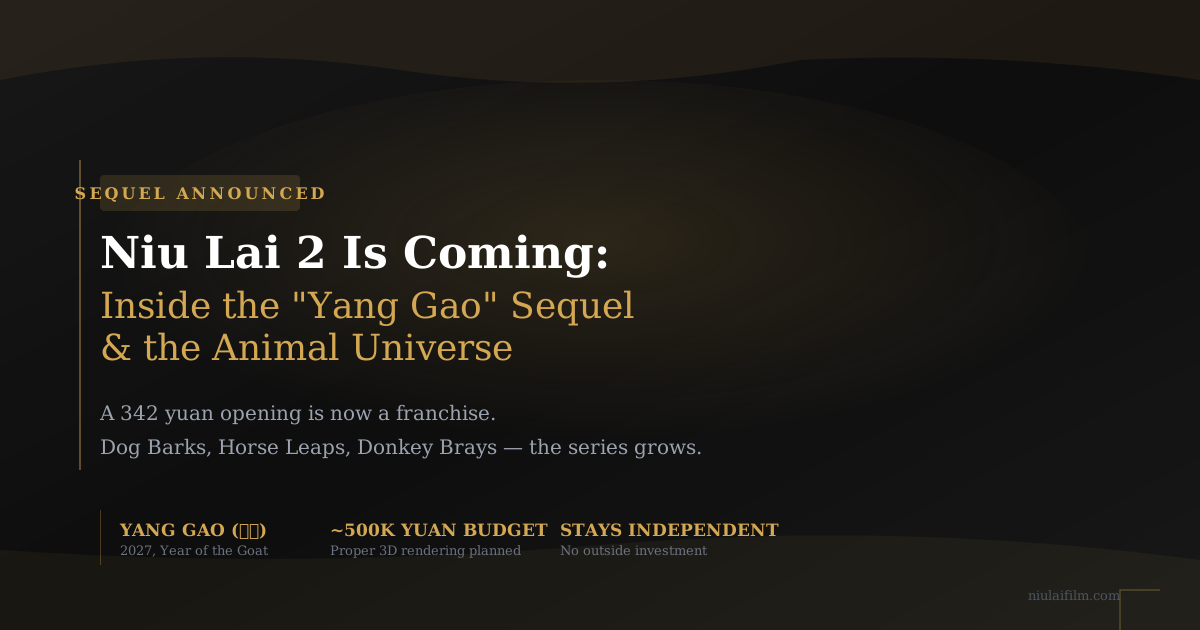
Niu Lai 2 Is Coming: Inside the 'Yang Gao' Sequel and the Animal Universe
A film that opened to 342 yuan on its first day is now spawning a franchise. Director Xin Yumeng confirmed a sister film called Yang Gao, targeting a 2027 release timed to the Year of the Goat.
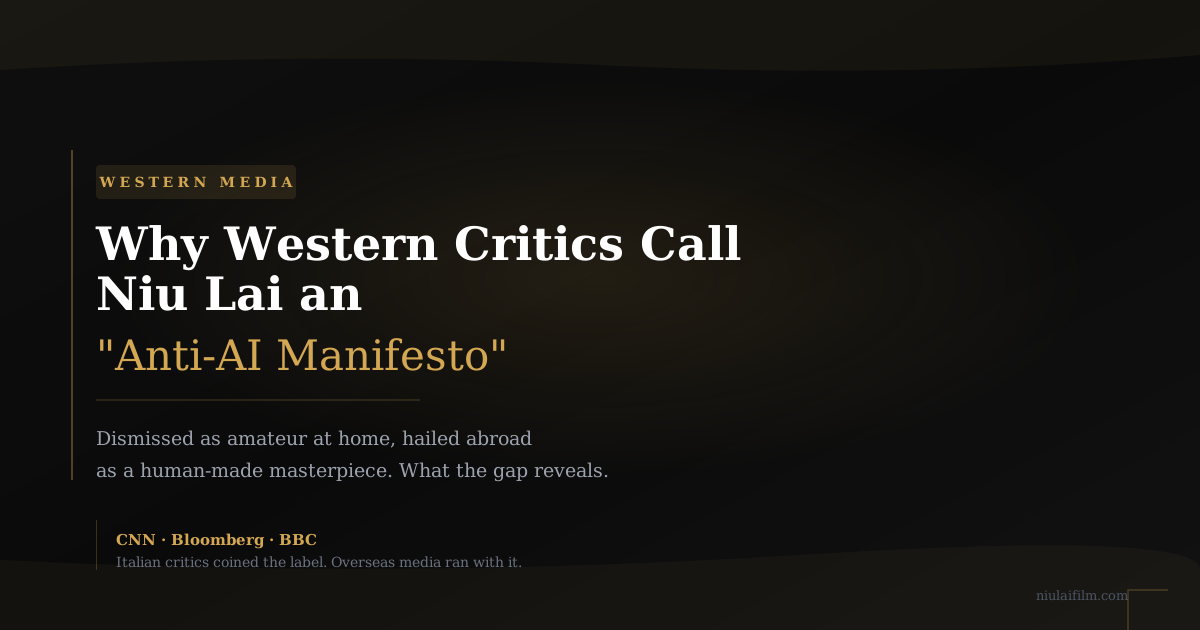
Why Western Critics Call Niu Lai an 'Anti-AI Manifesto'
The same film dismissed as amateur at home is being hailed abroad as a human-made masterpiece. Why the West reads Niu Lai as an anti-AI statement — and what that gap reveals about 2026.
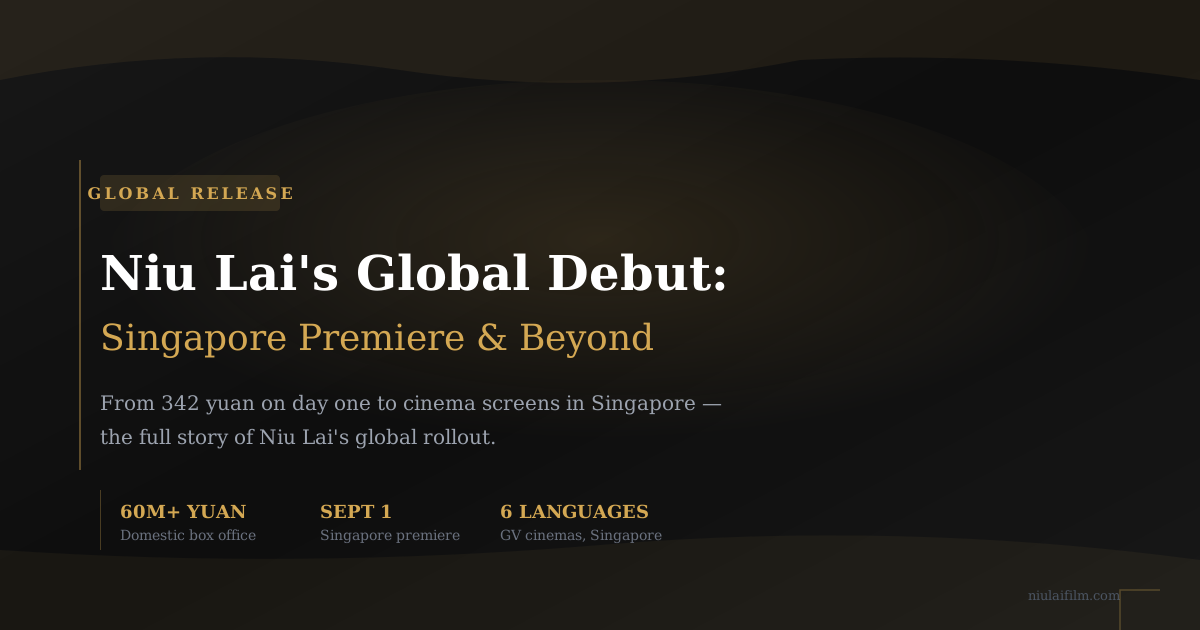
Niu Lai's Global Debut: Singapore Premiere and the Roadmap Beyond
From 342 yuan on opening day to cinema screens in Singapore. Niu Lai crossed 60 million yuan domestically on September 1 while premiering overseas — here is the full story of the global rollout.
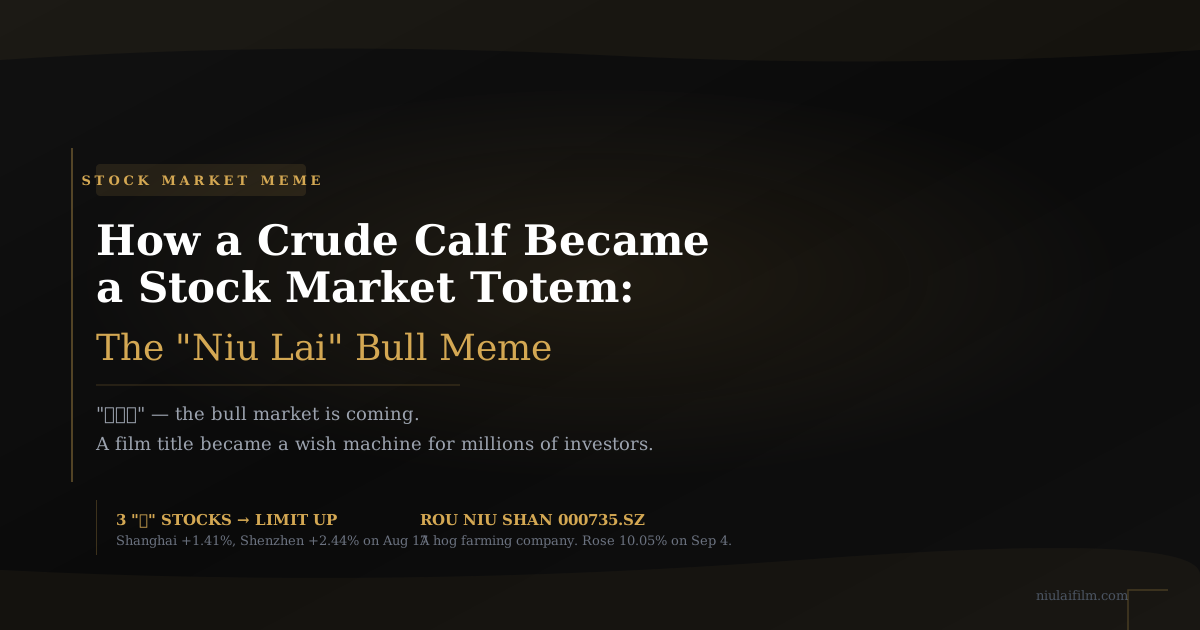
How a Crude Calf Became a Stock Market Totem: The Niu Lai Bull Meme
Niu Lai sounds almost identical to '牛市来' (the bull market is coming). What started as a film title became a wish machine for millions of retail investors — and three '牛' stocks hit limit up on the same day.
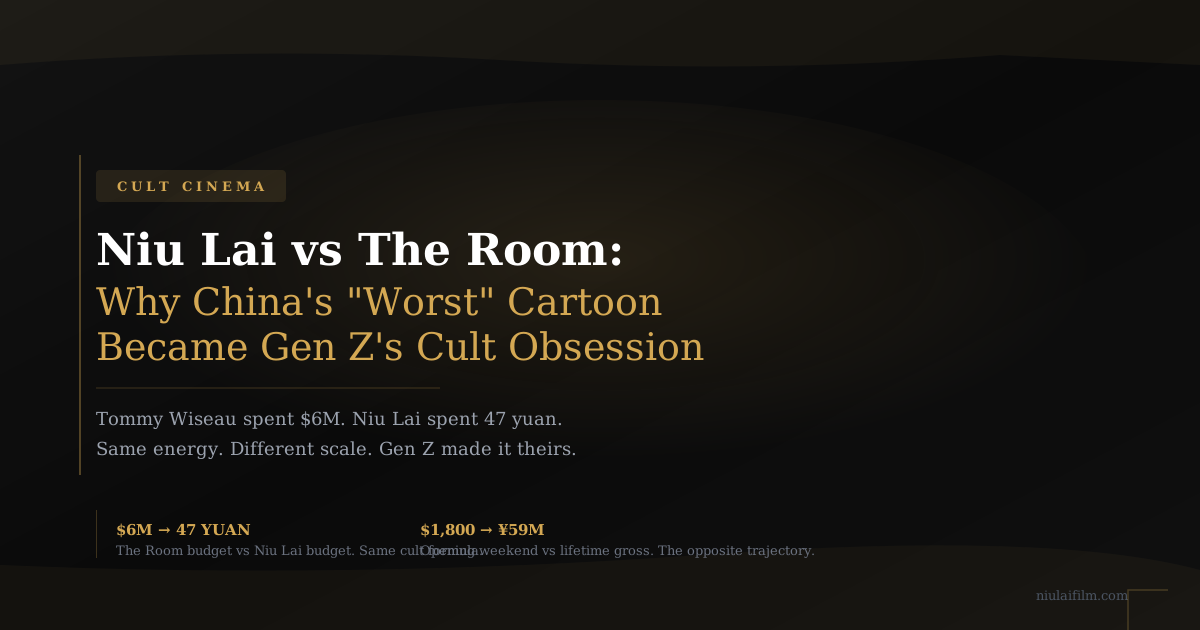
Niu Lai vs The Room: Why China's 'Worst' Cartoon Became Gen Z's Cult Obsession
The parallel to The Room is hard to avoid. Tommy Wiseau spent $6 million on a film that opened to $1,800. Niu Lai opened to 342 yuan and became a cultural event. Same energy, different scale — and that's exactly why Gen Z made it theirs.
Niu Lai Box Office: From 7,169 Yuan to 59 Million
The numbers behind Niu Lai tell a story that few in the film industry expected. A Chinese animated film made by a decorator and his mother reached nearly 60 million yuan by August 31.
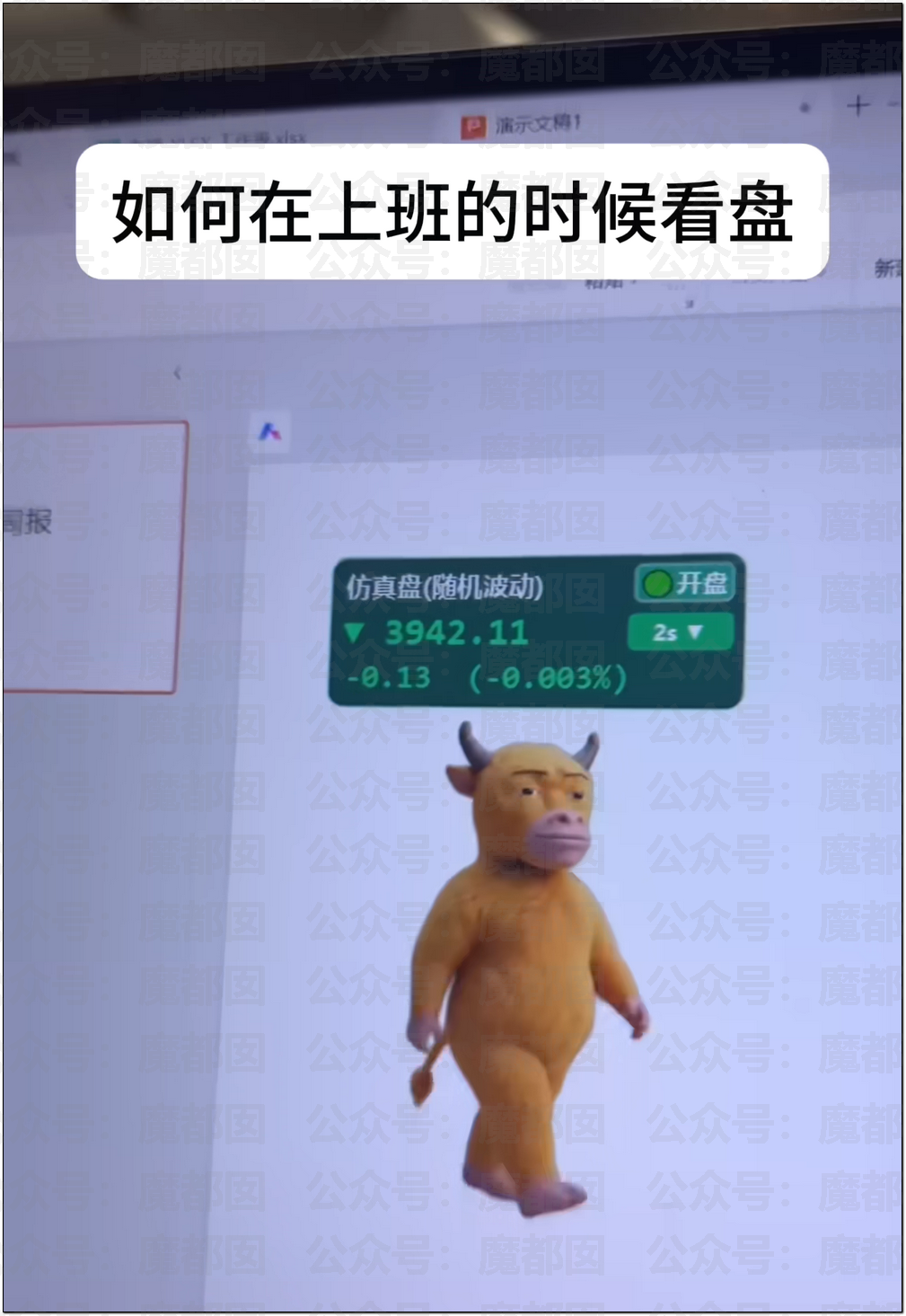
Niu Lai Made Without AI: Why That Matters in 2026
In a year when AI tools produce endless content, a low-budget Chinese animated film became known for the opposite choice. Niu Lai made without AI is one of the phrases most often attached to the movie.
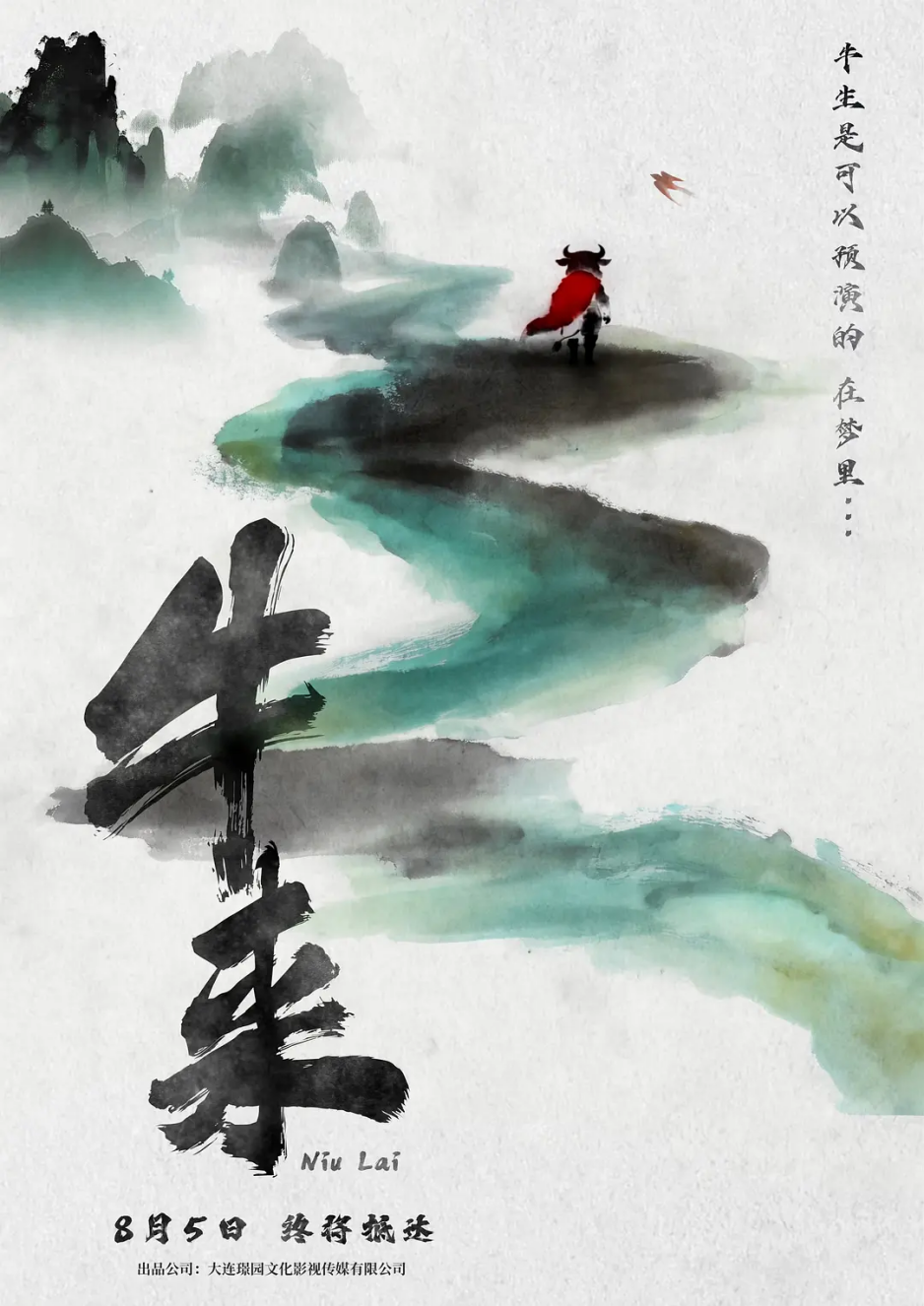
Niu Lai Singapore Release: Date, Languages & Where to Watch
The small Chinese animated film that became a surprise box office story is now crossing borders. Niu Lai Singapore release plans have drawn attention from overseas audiences.
Where to Watch Niu Lai (2026)
The question everyone is asking isn't whether Niu Lai is any good — it's where to actually see the thing. Here's what we know about international releases, fan subs, and the pirate elephant in the room.
A Mother, a Son, and a Handmade Cow: The Story Behind Niu Lai
Behind the memes is a quieter story. Niu Lai was not built by a studio. It was built by two people who had never made a film before — and that is the whole point.
Scornomics: How the \"Worst\" Chinese Animated Film Became a Hit
A strange word started showing up in financial journalism this summer: Scornomics. The case study was a Chinese animated film called Niu Lai — and the observation was uncomfortable.
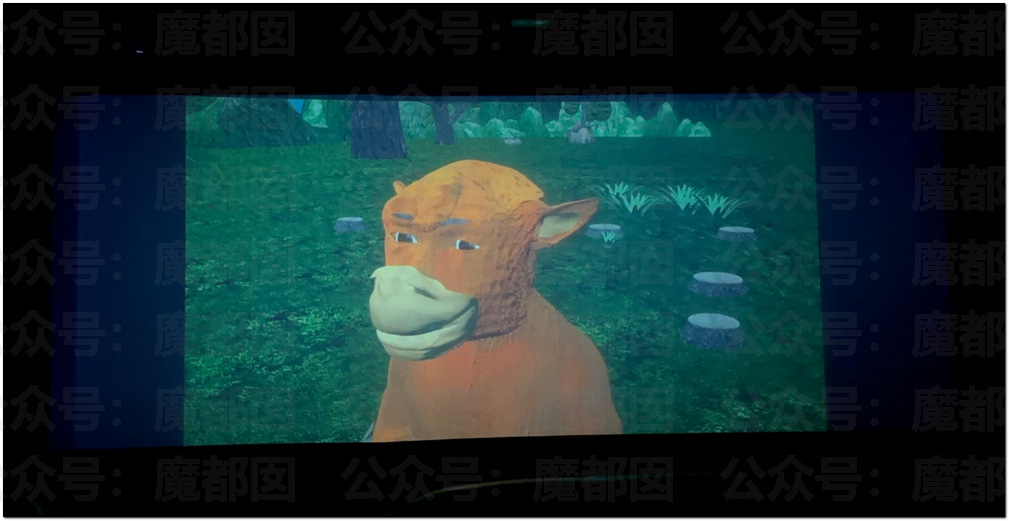
How a ¥7,169 Film Became China's Summer Sensation
Niu Lai went from the lowest box office of 2026 to a national meme overnight. Here's what happened.
Why 'Niu Lai' Is Worse Than AI (And Why That's The Point)
A technically flawed hand-drawn Chinese animation became a national sensation precisely because its imperfections prove a human made it. In an era of AI-generated perfection, that imperfection is the point.
niu-lai-fake-news